Our Vision and Values

Our Population

  • Wigan has the highest percentage of population over 65 years in Greater Manchester, but life expectancy for both men and women is lower than the average for England. With people living longer, the number of people over 65 is forecast to increase by 30,000 over the next 20 years.
  • 23% of our residents are diagnosed with a long-term condition impacting on their quality of life. They are supported by 34,000 carers (c.10% of our population). The population of Wigan Borough has higher recorded prevalence than the national average for diabetes; coronary heart disease; COPD and hypertension.
  • Over two-thirds of our population is overweight, with 13% of the population clinically diagnosed as obese, leading to other health complications.
  • 31% of children in Wigan are not school-ready for reception.
  • 29% of our residents live in the 20% most deprived areas in the country – nearly 100,000 people in the Wigan Borough. A significant proportion of activity in our GP practices is socio-economic – linked not just to health but to debt, domestic abuse, loneliness, access to work, and cold homes.
  • Wigan Borough also has greater rates of mental health diagnoses than the national average, which are often closely related to physical health conditions. For example, 38,933 patients (around 15% of the adult population) had a diagnosis of depression in 2019/20.
  • 65% of residents are of working age. Of those, 40% are at high risk of unplanned hospital admission, often with complex dependency on public services.

Our Strategy 2030

Strategy 2030 is Wrightington, Wigan and Leigh Teaching Hospitals NHS Foundation Trust’s strategic plan for the coming decade. Developed through extensive engagement with staff, patients, and system partners, it outlines the Trust’s long-term direction of travel and sets out how it intends to respond to current and future health needs in the Wigan Borough and wider region.

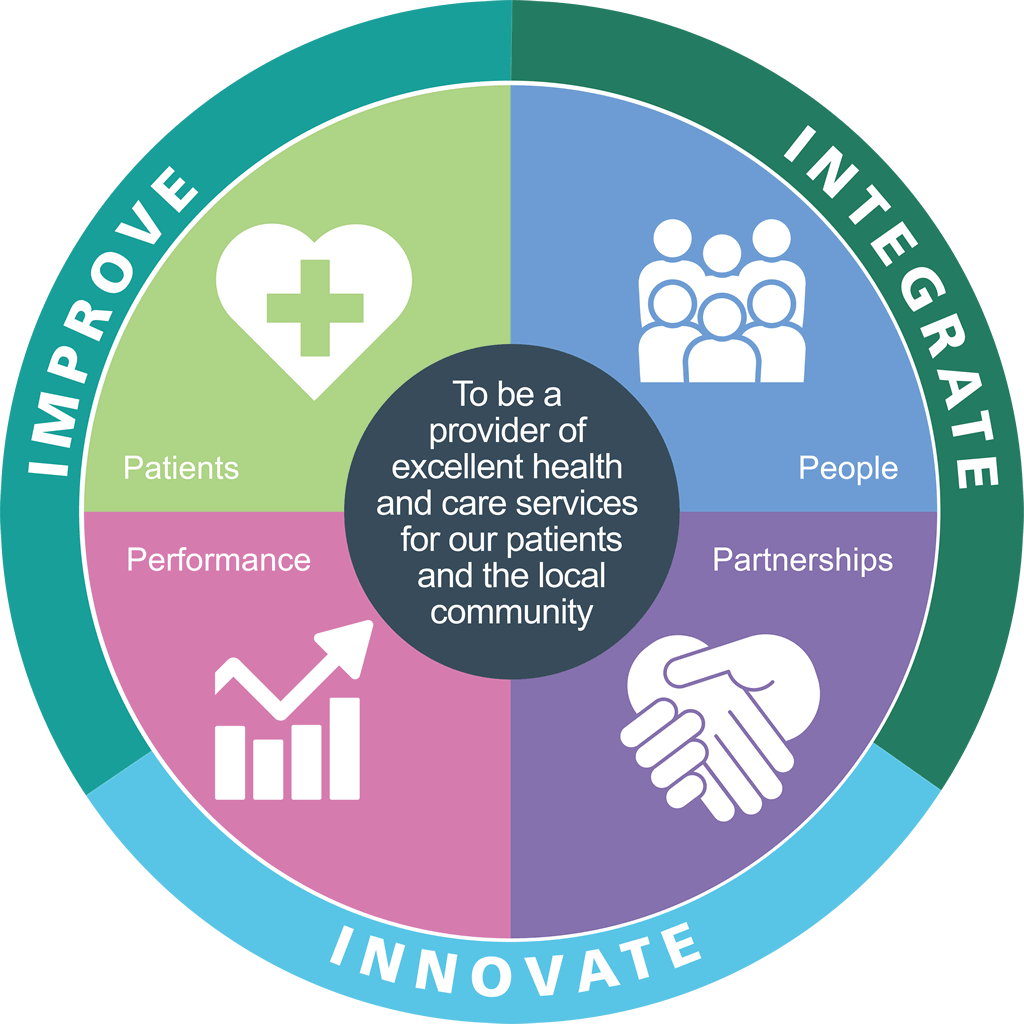
The strategy is structured around the Trust’s established four priorities—Patients, People, Performance and Partnerships—and is organised under three overarching themes: Improve, Integrate, and Innovate. These themes provide the framework for action across all areas of the organisation, from clinical care to workforce, estates, and digital transformation.

Improve relates to the continual advancement of service quality and patient outcomes. This includes a commitment to safety, learning, compassionate care, and evidence-based practice. Integrate reflects the Trust’s ambition to work more effectively across organisational boundaries, particularly within the Healthier Wigan Partnership and the Greater Manchester Integrated Care System. It highlights the importance of neighbourhood-based working, system alignment, and multi-agency collaboration. Innovate refers to embracing new models of care, digital tools, and research to reshape how services are delivered, with a focus on prevention, personalisation, and sustainability.

The strategy responds to a wide range of contextual challenges. These include a growing and ageing population, significant levels of deprivation and long-term illness in the local area, workforce pressures, and financial constraints. Strategy 2030 also acknowledges the impact of the COVID-19 pandemic and the continuing need for recovery across both patient services and staff wellbeing.

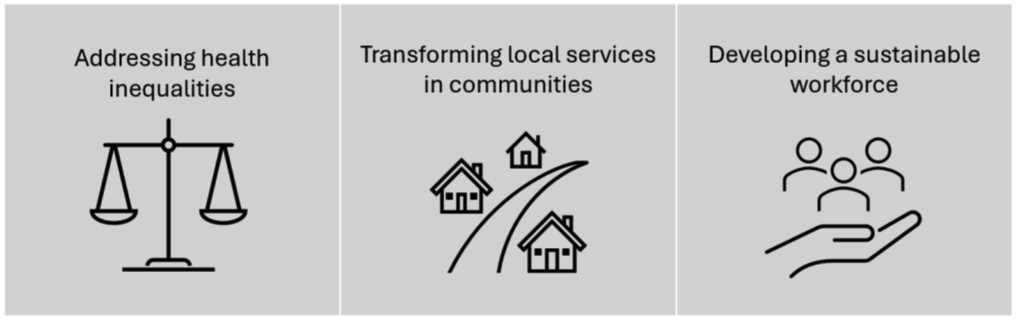
Operational priorities include the integration of acute and community services, a shift toward care closer to home, reduction of health inequalities, and investment in digital solutions to support remote monitoring and outpatient transformation. The Trust is also focused on embedding a culture of continuous improvement and developing its role as an anchor institution, supporting local employment, skills and community wellbeing.
WWL’s estate and infrastructure are also addressed in the strategy, with recognition of the need for modernisation to support new models of care. There is an emphasis on using data and digital platforms to enable service change and improve patient access. The Trust also commits to contributing to national and local sustainability goals, including reducing its environmental impact.

Workforce is a key focus area. Strategy 2030 highlights the need to support, train and retain a diverse workforce, create a positive working environment, and maintain high levels of staff engagement. This includes aligning with the national People Plan and implementing a local People and Culture Strategy.

The strategy is intended to be a dynamic document, updated as circumstances evolve. It provides the foundation for WWL’s annual planning cycle and corporate objectives, linking strategic aims with delivery and oversight. Governance, assurance, and performance monitoring arrangements are aligned with the priorities set out in Strategy 2030, ensuring consistency and accountability across the organisation’s work.

As part of this journey, we are pleased to see our joint transformation programme with Wigan Council and NHS GM ICB now in train. The ‘Better Lives Programme’ has four workstreams, two of which have already started (admissions avoidance and system visibility) and two of which will commence in phase 2 of the programme:

  • Admission avoidance – improving access to and capacity of community services, with decision making at the front door to increase independence
  • System visibility and active system leadership – creating one single data driven dashboard for system visibility across WWL/NHS GM ICB/Wigan Council to drive forward active system leadership
  • Acute flow and length of stay – improving hospital flow through treatment and diagnostic progression, and optimising ward processes and ways of working
  • One Wigan Community Model – defining and creating a community model to support care in the right settings, increasing independence

Our Values